
"Andes mountains"
1000 article(s) found

Colombian Santa Rita Coffee Manor Andes Micro-producing area American Coffee
The history of coffee cultivation in Colombia can be traced back to the Spanish colonial era in the 16th century, and there are many theories about the history of coffee in Colombia: one: it is said to come from the island of Haiti in the Caribbean and from El Salvador in Central America. Second: in 1808, a priest introduced coffee beans to Colombia for the first time from the French Antilles via Venezuela. One of them

Introduction of Colombian Vera Coffee producing area what is the flavor of Colombian Vera coffee?
Professional coffee knowledge exchange more coffee bean information please follow the coffee workshop (Wechat official account cafe_style) Colombia's three Codiera mountains run north and south, extending into the Andes, local coffee farmers grow coffee along the highlands of these mountains, with diverse climate production conditions; also because of changes in topography and altitude, Colombia's coffee industry

A brief introduction to the description of the regional flavor produced by the grinding scale treatment of Columbia Huilan coffee beans
Colombian coffee is divided into more than 200 grades, which means that the coffee is very regional. The country's coffee-producing areas are located in the Andes, where the climate is mild and the air is humid. Colombia has three Codiera mountains running north and south, right into the Andes. Coffee is grown along the highlands of these mountains. The mountain steps provide a diverse climate, and it is the harvest season all year round.

Does Ecuador's Andes Coffee taste good? Las Tolas Farm Coffee introduction
Professional Coffee knowledge Exchange more information about coffee beans Please follow Coffee Workshop (Wechat official account cafe_style) Las Tolas Farm is located on the slopes of the Andes at an elevation of 1700 meters, one of the seven biodiversity hotspots on earth, operated by Arnaud Causse which has been managed since 2004. Arnaud, who has lived in Ecuador for ten years, used to
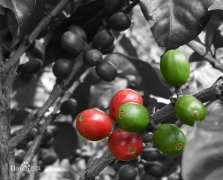
Micro-producing area of Santa Rita coffee in the Andes, Colombia
The history of coffee cultivation in Colombia can be traced back to the Spanish colonial era in the 16th century, and there are many theories about the history of coffee in Colombia: one: it is said to come from the island of Haiti in the Caribbean and from El Salvador in Central America. Second: in 1808, a priest introduced coffee beans to Colombia for the first time from the French Antilles via Venezuela. One of them

Colombian coffee introduction variety grade
The country's coffee-producing areas are located in the foothills of the Andes, where the climate is mild and the air is humid. Colombia has three Cordilleras mountains (sub-mountain system) running north and south, right into the Andes. Coffee is grown along the highlands of these mountains. The mountain steps provide a diverse climate, which means that the whole year is the harvest season, with different species at different times.

Colombian Coffee region introduces Hope Manor in the Andes
The pure taste of Colombian coffee comes from Colombia's natural environment with the most favorable conditions for coffee growth. But beyond that, it is inseparable from the hard work of local growers. In Colombia, coffee cultivation has reached 1.07 million hectares, there are about 302000 coffee plantations in the country, and 30 to 40 per cent of the rural population depends directly on coffee production. Columby

A brief introduction to the flavor and taste characteristics of boutique coffee in Santa Cruz Manor, Ecuador
Central mountain: after entering Ecuador from Colombia, the Andes is divided into the eastern and western Cordillera mountains, with a plateau high in the north and low in the south, averaging between 2500 and 3000 meters above sea level. The Andes run through the middle of the border. The ridges crisscross, dividing the plateau into more than ten intermountain basins. The most important are the Quito basin and the Cuenca basin in the south. Volcanic crowds in the territory

A brief introduction to the varieties of Columbia Linglong flavor coffee beans produced by the method of taste treatment
A brief introduction to the French varieties of Columbia's exquisite flavor coffee beans Colombia has three Codiera mountains running north-south, right into the Andes. Coffee is grown along the highlands of these mountains. The mountain steps provide a diverse climate, where the whole year is the harvest season, and different kinds of coffee ripen at different times. And fortunately, Colombia doesn't.

Peruvian coffee with elegant mild acidity Flavor Description Roast Degree Taste Variety Manor Introduction
Peru is located in the west of South America, with a coastline of 2254 kilometers. The Andes runs through the north and south, and the mountains account for 1/3 of the country's area. They belong to the tropical desert area, and the climate is dry and mild. Peruvian coffee is mostly grown at the foot of the Andes, where it is rich in quality traditional Central American coffee beans. Peruvian coffee beans produced in Chanchamayo in the center and Cuzco in the south

Is the honey treatment of Colombian Na Linglong Coveta Manor very sweet? Is it good?
Is the honey treatment of Colombian Na Linglong Kuweita manor honey very sweet? Is it good? Columbia Na Linglong Coveta Manor Honey processing area: na Linglong Manor: Covetta Manor altitude: 1600m~1900m Variety: Kaddura Baking degree: medium Baking method: honey treatment Flavor: honey, dried Longan, solid and mellow, smoke, caramel sweetness, meticulous finish

The Galapagos Coffee Manor in Ecuador, which can be made into high quality mixed coffee, has a special flavor and taste.
The Republic of Ecuador is located in northwestern South America. It is bordered by Colombia in the northeast, Peru in the southeast and the Pacific Ocean in the west. It covers an area of 256370 square kilometers and the coastline is about 930km long. The equator runs north of the border, and Ecuador means the Spanish equator. [3] Climate Ecuador is divided into the western coast, the central mountains, the eastern Amazon basin and the Galapagos Group
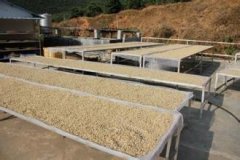
Light floral fruity Galapagos Fine Coffee Bean Growing Location Climate Elevation Simple
Central mountains: Andes from Colombia into Ecuador Err border, divided into east and west Cordillera mountains, between the two mountains for the north high south low plateau, average altitude between 2500 meters to 3000 meters. The Andes run through the middle of the border. Ridges crisscross the plateau, dividing it into more than a dozen intermountain basins. The most important are Quito Basin and Cuenca in the south.

An introduction to Coffee Culture in Colombia
Following Cafe (Wechat official account vdailycom) found that the Beautiful Caf é opened a small shop of its own in Colombia's coffee-producing region in the Andes. Colombia has three north-south mountains that gradually merge from north to south to form part of the Andes. Coffee is grown along the highlands of these mountains. The climate there is mild and the air is humid.
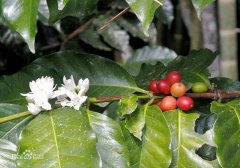
American coffee beans in the micro-producing areas of the Santa Rita Andes, Colombia
The history of coffee cultivation in Colombia can be traced back to the Spanish colonial era in the 16th century, and there are many theories about the history of coffee in Colombia: one: it is said to come from the island of Haiti in the Caribbean and from El Salvador in Central America. Second: in 1808, a priest introduced coffee beans to Colombia for the first time from the French Antilles via Venezuela. One of them

Introduction to the characteristics of high-quality coffee beans in the producing area of Ecuadorian coffee with balanced acidity
Ecuador is divided into the western coast, the central mountains, the eastern Amazon River basin and the four central regions of the Galapagos Islands, with diverse climatic conditions. The western coastal plain belongs to the tropical rain forest climate, with an average temperature of 23-25 ℃. The central Andes. The intermountain basin in this area belongs to the savanna climate, and the mountain belongs to the subtropical forest climate, with perennial snow above 4000 meters above sea level. Annual average decline

Columbia Coffee Manor introduces Cauca Cauca Lazimus Manor
The first part is the triangle of the background, which symbolizes the Andes and implies that most of the Arabica coffee growing areas in Colombian coffee belong to high-altitude mountains. It is well known that the main coffee producing areas in Colombia are located in three Sichuan-lined mountains, all of which are part of the Andes. According to the geographical environment and climate, different areas of coffee

Colombia Coffee Flavor Taste Manor Introduction Colombia Fine Coffee
The first part is the triangle in the background, which symbolizes the Andes and also implies that the Arabica coffee in Colombia coffee is grown in high-altitude mountainous areas. It is well known that the main coffee producing areas in Colombia are distributed in three mountain ranges arranged in Sichuan, which are part of the Andes. Depending on the geographical environment and climate, coffee in different regions

Introduction of Fine Coffee beans in Galapagos Coffee Manor, Ecuador
West coast: including coastal plains and foothills, high in the east and low in the west, generally below 200 meters above sea level, with some hills and low mountains at an altitude of 600 to 700 meters. Belongs to the tropical rain forest climate, the southernmost end begins to transition to the savanna climate. The average annual precipitation decreases from more than 3000 mm to about 500mm from north to south. Central Mountains: the Andes enter Ecuador from Colombia

The Peruvian Coffee Flavor with good aroma describes the Historical Origin and Cultural course of Peruvian Coffee
Peruvian coffee cultivation history is not long, but as a rising star, Peruvian coffee is gradually opening up its popularity and entering the international market. Peru is located in western South America, with a coastline of 2254 kilometers. The Andes runs from north to south, and the mountains account for 1% of the country's area. it belongs to the tropical desert region with a dry and mild climate. Peruvian coffee is mostly grown at the foot of the Andes, where it is abundant.